
Basement moisture is not always obvious at first.
Sometimes it starts with a musty smell, a small stain on the wall, or a floor that feels damp after heavy rain. In Massachusetts, where homes deal with snow, rain, humidity, and seasonal temperature changes, basements need extra attention.
The body content of your post goes here. To edit this text, click on it and delete this default text and start typing your own or paste your own from a different source.Start by checking the air. If the basement smells musty even after cleaning, moisture may be trapped somewhere. That smell can come from damp concrete, poor airflow, small leaks, or materials that have absorbed water over time.
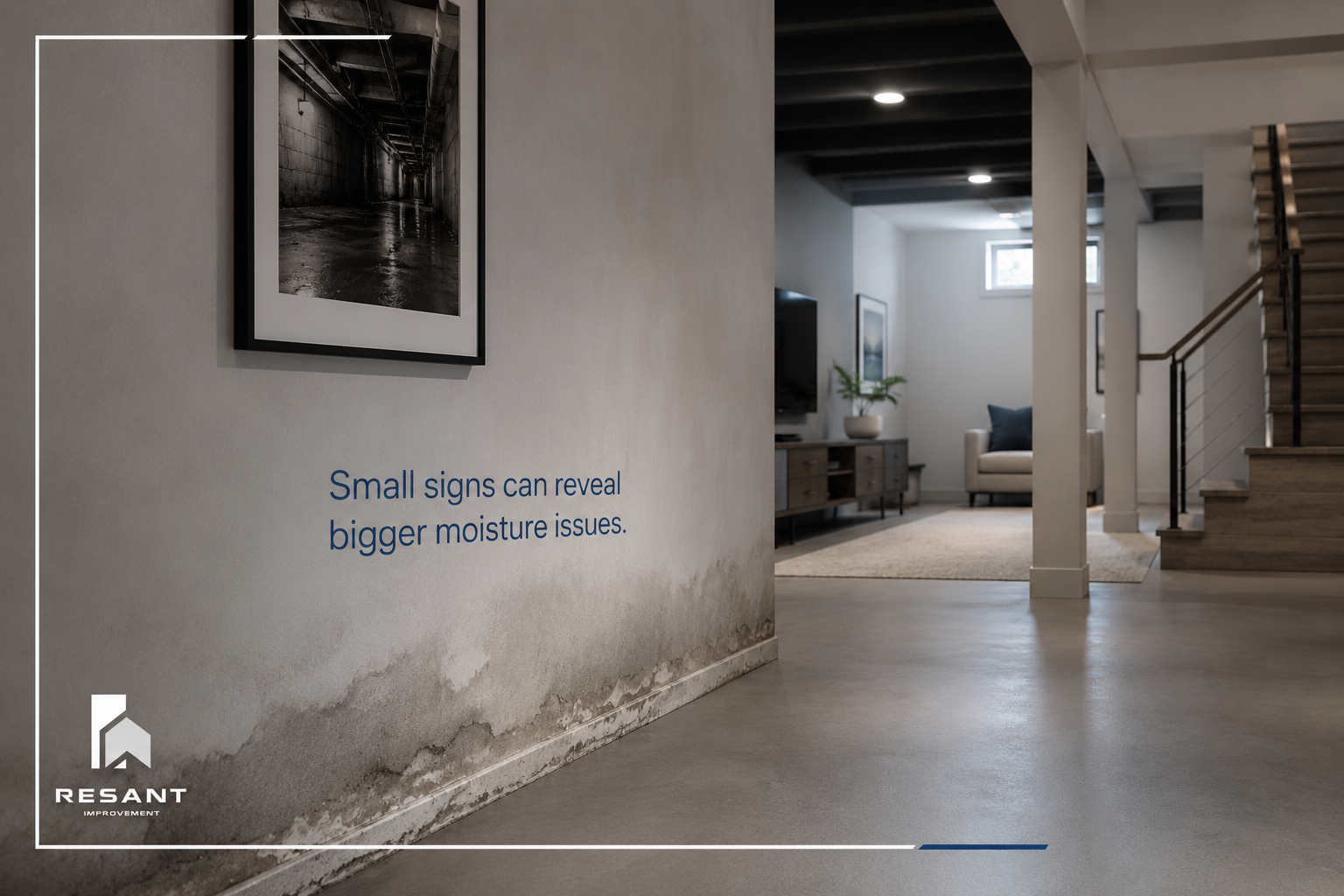
Walls and floors can also show early signs. Look for peeling paint, white powder on concrete, dark spots, bubbling surfaces, soft flooring, or water marks near the foundation. These details may seem small, but they often point to a larger moisture issue.
Pay attention after storms. If water appears near corners, along walls, or around basement windows, the problem may be connected to drainage, grading, gutters, or cracks in the foundation.
Humidity is another clue. A basement that always feels sticky or cold can create the right conditions for mold, damaged finishes, and long-term structural concerns.
Before finishing a basement, adding flooring, or building walls, moisture should be checked first. Covering the problem can make repairs harder later.
A dry basement gives homeowners more options. It can become storage, living space, a guest area, or a finished room that actually supports the home.
Check Moisture Before You Finish the Space
If your basement feels damp, smells musty, or shows signs of water, Resant Improvement can help you understand what should be checked before starting any renovation.
Contact Resant Improvement to talk about your basement project!