What Is an ADU and How Can It Help With Family Living?

Hosting family can be wonderful, but sharing the same space for days or weeks can quickly become uncomfortable.


That is one reason more homeowners are looking at ADUs as a practical solution. An Accessory Dwelling Unit gives guests, parents, adult children, or relatives a private place to stay while keeping everyone close.


The biggest advantage is separation without distance.
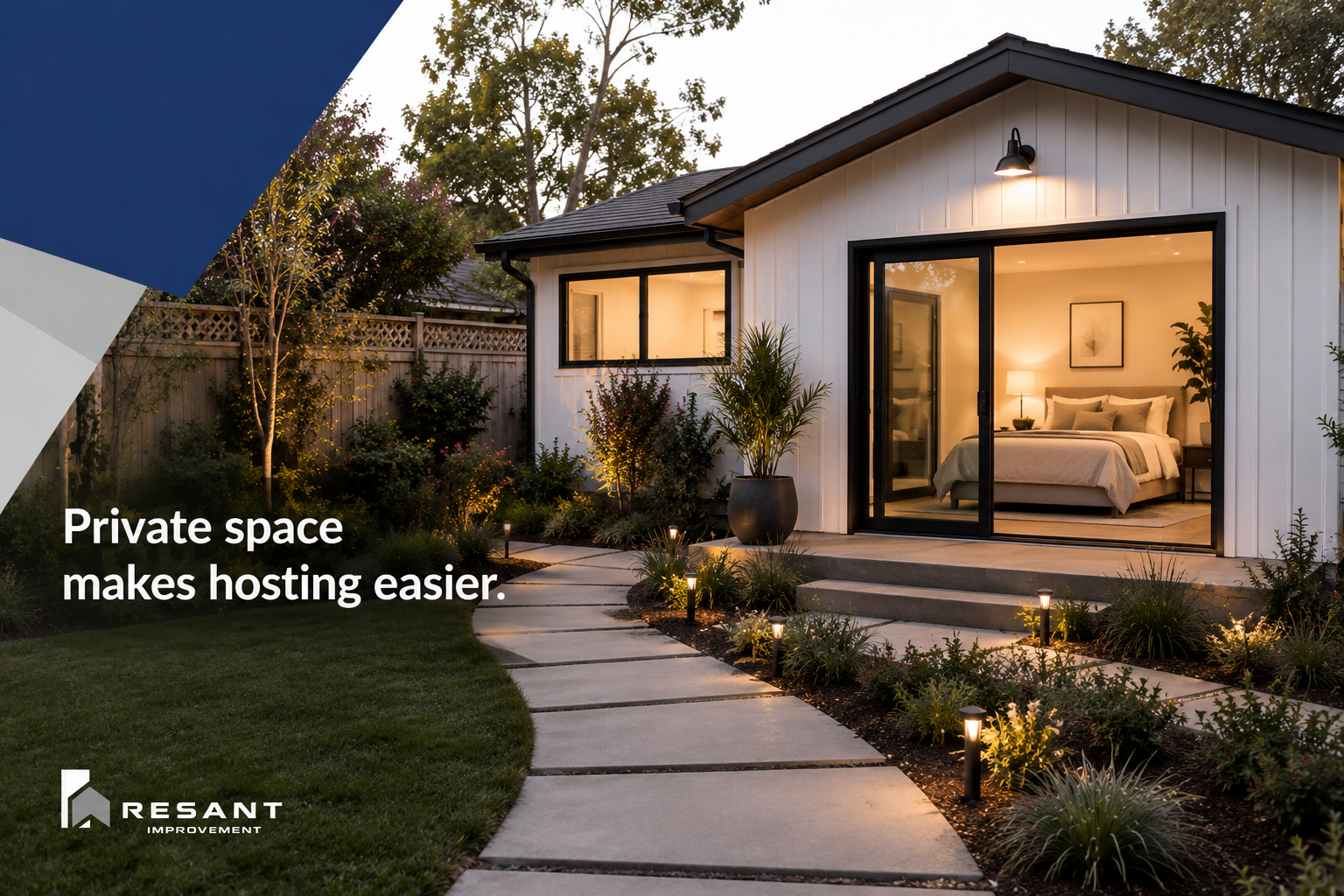
With an ADU, guests can have their own bedroom, bathroom, small kitchen, and daily routine. They are still near the main home, but they do not have to interrupt the household’s schedule every morning, night, or mealtime.


This can be especially helpful for long-term visits. A guest room works well for a weekend. For extended stays, privacy starts to matter more. People need space to rest, work, get ready, and move through their day without feeling like they are in the way.


ADUs can also support families whose needs are changing. Aging parents may want to live near their children while keeping independence. Adult children may need a transition space. Some families simply want more flexibility for the future.


Before planning an ADU, homeowners should think about access, privacy, bathroom placement, parking, utilities, and how the unit will connect to the rest of the property. A good design should feel useful now and still make sense years later.


Plan a Space That Works for Real Life


If you are considering an ADU for guests, family, or future flexibility, Resant Improvement can help you think through the layout, function, and construction details.


Contact Resant Improvement to start planning a space that gives your family more comfort and privacy!


by Marquis DosSantos 21 July 2026
Some home issues are easy to ignore at first. A small crack. A door that starts sticking. A floor that feels uneven. A moisture mark in the basement. Sometimes these signs are harmless, but they can also point to something deeper. The first thing to notice is change. If a crack has been there for years and never moved, it may not be urgent. But if it is getting wider, spreading, or appearing near doors and windows, it deserves attention.
by Marquis DosSantos 10 July 2026
When you live in the same home every day, your eyes start to skip over certain things. That is where many homeowners miss opportunities. A home can be clean and still feel difficult to live in. The issue is often in the small areas that keep creating friction. For example, the basement may need a clear purpose instead of becoming the place where everything gets left. The best way to notice these problems again is to pay attention to patterns.
by Marquis DosSantos 10 July 2026
A home can feel disorganized even when it has enough square footage.  The first step is to look at where clutter keeps returning. That spot is usually telling you something. Shoes near the door may mean the entryway does not have a good drop zone. Towels and products around the bathroom may mean the storage looks nice, but does not actually work. Before adding more shelves or buying more baskets, pay attention to the routine of the house. What items are used every day? Which surfaces become messy first? What needs to be hidden, and what needs to stay easy to reach?
by Marquis DosSantos 7 July 2026
A bathroom remodel can go wrong before the first tile is installed. Even though a bathroom is usually a small space, there is a lot happening behind the walls: plumbing, electrical, ventilation, moisture control, lighting, and daily use all in one room. Before starting, the first thing to check is how the bathroom is actually used.
by Marquis DosSantos 7 July 2026
People arrive with food, kids move from room to room, someone is trying to cook, guests are looking for a bathroom, and the backyard suddenly becomes part of the main living space.  That is when homeowners start noticing things they usually ignore.
by Marquis DosSantos 23 June 2026
A renovation estimate should never come from a quick glance. Before giving you a price, a contractor should understand what the project really involves: the condition of the space, what may be behind the walls, how the room is used, and what could create problems once the work begins. That is where many renovation surprises start.  In a bathroom remodel, the price should not be based only on tile, fixtures, and a vanity. A contractor should look at plumbing access, ventilation, moisture concerns, wall conditions, floor leveling, and whether the layout will still work after everything is installed.
by Marquis DosSantos 23 June 2026
Some renovations look perfect in pictures. The materials are new. The colors match. The space looks clean. But once people start living in it, something feels off. That usually happens when the project was planned for appearance before daily use. A kitchen can photograph beautifully and still feel hard to cook in. If the sink, stove, refrigerator, and counter space do not work well together, the homeowner notices it every day.  A bathroom can look updated and still feel uncomfortable. Poor lighting, limited storage, awkward fixture placement, or the wrong tile choice can make the space harder to use than expected.
by Marquis DosSantos 19 June 2026
Some spaces only become a problem when someone else needs to use them. A basement bathroom. A small guest bathroom. An unfinished corner near the entryway. A lower-level space that works “well enough” for the family, but suddenly feels incomplete when guests are in the house.
by Marquis DosSantos 19 June 2026
An unfinished basement often becomes a space people avoid.  In this project, the bathroom area was already there, but it was not usable yet. The framing was exposed, the shower area was unfinished, and the space still felt like part of a construction zone instead of part of the home. The goal was simple: turn that incomplete basement bathroom into a finished space that could actually support the family’s routine.
by Marquis DosSantos 15 June 2026
A good home renovation starts with one question: What is not working in your home right now?  Maybe your kitchen feels too tight. Maybe storage is always a problem. Maybe your layout no longer fits your routine. When you understand the real issue, the project becomes much easier to plan.